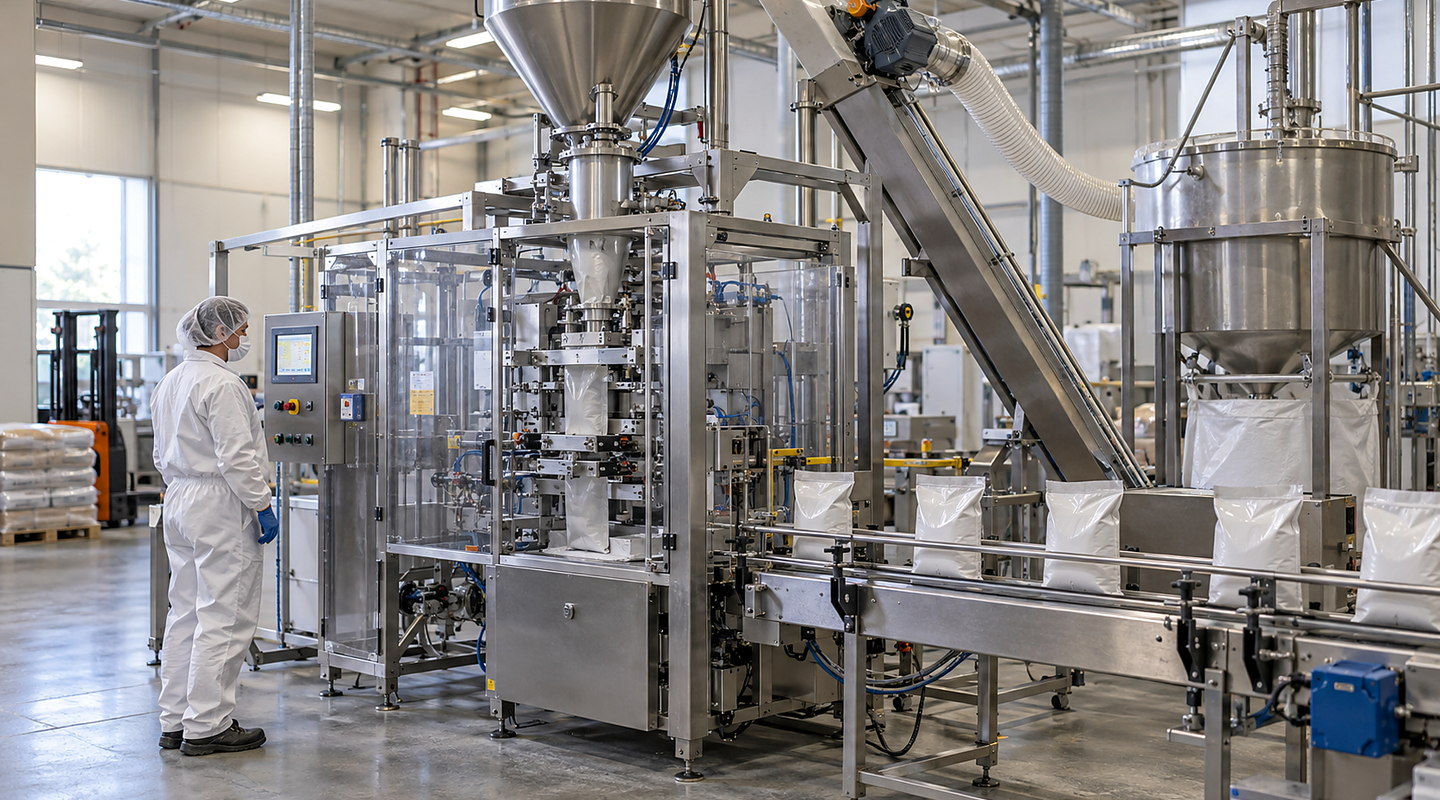
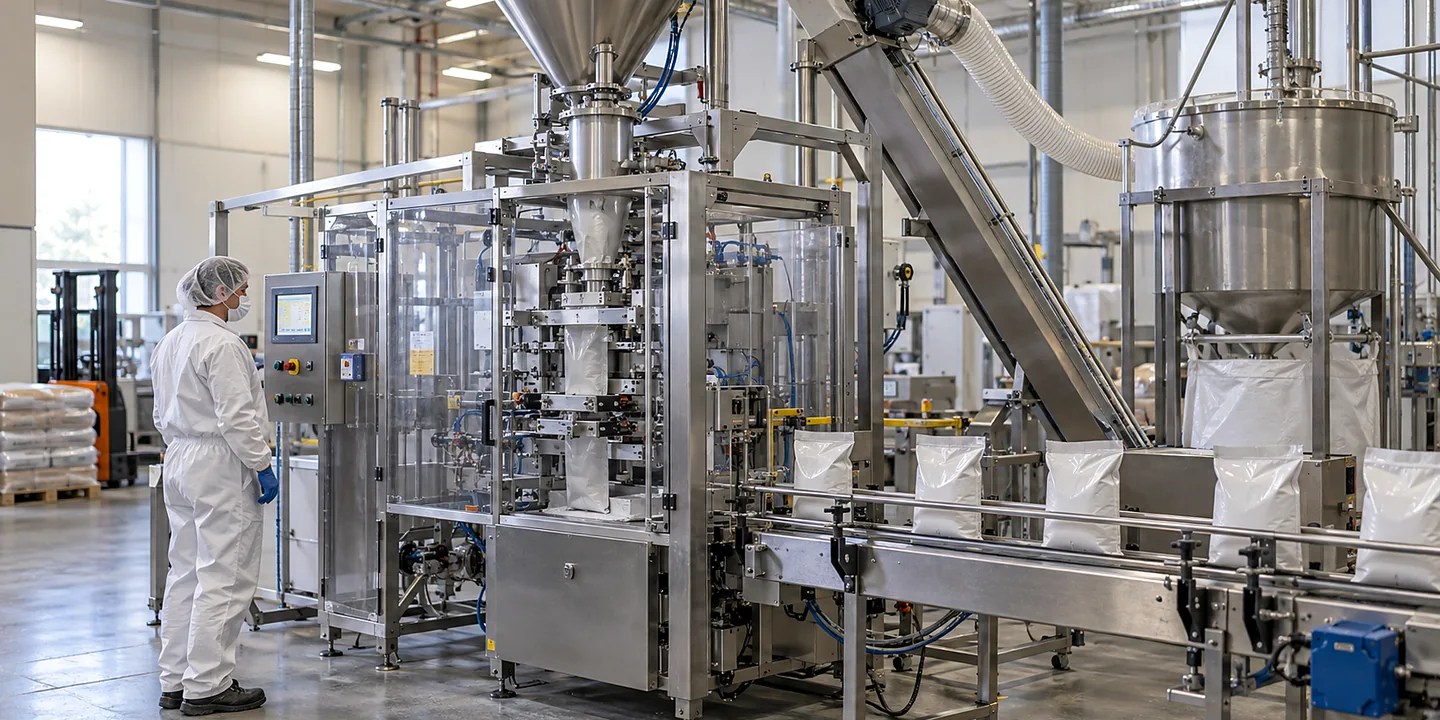
Stick pack filling machines for powder and liquid doses
Stick-pack equipment forms narrow packs around a defined portion of product. Choose the dosing and film arrangements from the product and serving format, then compare complete accepted packs across all working lanes and the intended production schedule.
Speak directly with Lancing about powder and liquid stick-pack equipment.
Quick answer
Should we choose stick packs or sachets for our product?
Compare the required serving size, pack shape, opening and presentation with the proposed film and dosing method. Trial the actual product through forming, filling and sealing. Include code position, pack checks and changeover in the comparison, using accepted finished packs as the basis for the machinery decision.
Selection criteria
Specify more than the number of lanes
Use these decisions to define the proposed equipment and the checks needed for your application.
Decision 1
Match dosing to the product
Describe whether the product is a powder, granule or liquid and provide normal production variation. Compare suitable dosing concepts with representative material. A similar nominal portion size does not establish that different products can share the same filling arrangement.
Decision 2
Define the finished stick
Provide width, length, serving quantity, seal arrangement and opening requirements. Include artwork and the expected presentation after settling. The finished pack should be assessed for handling and use as well as whether it fits the machine format.
Decision 3
Control every working lane
For a multi-lane proposal, identify how dose and seal results will be checked by lane. Retain lane identity during trials. An overall average can hide a recurring problem in one filling or sealing position.
Decision 4
Assess film movement and cut position
Use the production film and approved printed repeat. Check registration, seals, cut position and legibility of variable codes. Include starts and reel changes so acceptance is not based only on a short uninterrupted run.
Decision 5
Count accepted finished packs
State the total quantity and available production time, then include refill, film change, cleaning and rejected packs. Compare the output at the agreed completed-pack handover. A nominal cycle rate multiplied by lane count is only a planning starting point.
Decision 6
Plan product and format changes
List the intended SKUs and which change product, portion or film dimensions. Define tooling, cleaning, recipe and first-off checks. Compare the work required across the actual campaign rather than assuming all changes are electronic recipe changes.
Applications
Two useful starting points for stick pack filling machines
The right choice changes with powder & liquid stick-pack equipment product behaviour, container, bag or pack range, your line layout and required results.
On a multi-lane stick-pack machine, an overall average can conceal a recurring problem in one position. Keep lane identity when recording quantity, seal condition, print position and rejects. Confirm how that identity remains available once packs are cut, discharged and collated.
One lane differs consistently
Compare that lane's dosing path, product release and film presentation with neighbouring lanes. Identify whether the defect begins during filling, longitudinal sealing, end sealing or cutting. Avoid compensating across all lanes for a local problem until its cause is understood.
Several lanes change at the same event
Check shared product supply, replenishment, film tracking and the timing of a stop or restart. Preserve individual results before and after the event. A common timing change can affect several lanes without every dosing component needing adjustment.
Print and dose pass, but packs fail later
Inspect cutting, separation, discharge and collation. Narrow packs can overlap or become mixed before secondary packing. State whether counts, orientation and reject separation are part of the proposed machine scope or a downstream responsibility.
Release a restart by condition, not only by time
Define the checks required after a reel change, product change, dosing adjustment or sealing intervention. Identify the first-off packs by lane and retain the agreed acceptance result before normal output continues. The required number and method of checks must follow the approved application procedure.
When comparing output, state active lanes, cycle conditions and accepted finished packs at the agreed handover. Include rejected lanes and stoppages rather than multiplying a nominal cycle figure by the maximum lane count. Use the stick-pack acceptance resource and format checklist to retain those assumptions.
Important limits
Know what needs a separate check
The selected method must be trialled with representative product and packaging.
Supplier tolerances and product-condition changes can alter handling or fill behaviour.
Equipment selection does not replace product, hygiene, packaging or regulatory validation.
Your final solution for powder and liquid stick-pack equipment must reflect the law, current standards and site-specific risks that apply to your installation.