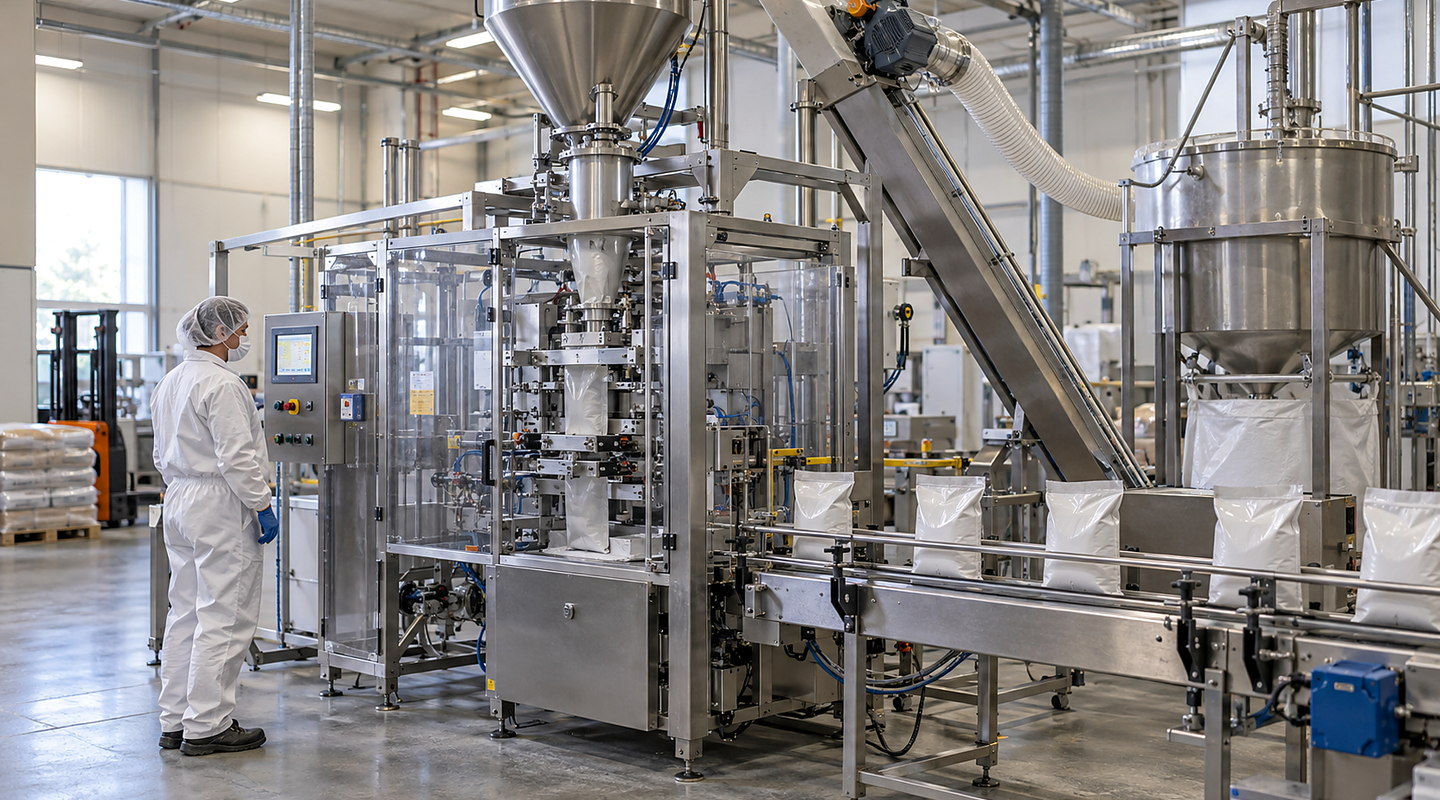
Stick Pack Filling Machines: How the Process Works
Follow the operating sequence for stick pack filling machines, from preparing the input and controlling the main task to handling exceptions and checking results.
A stick-pack line forms the film, portions the product, seals and cuts the sticks, then transfers them to the agreed handover. Specify how quantity, seal condition, print position and accepted output will be checked at each working lane.
Use the actual product, finished-pack drawing and production film to connect those stages. The acceptance checklist helps retain lane identity through filling, cutting, discharge and subsequent pack checks.
Understand the complete route from input to accepted output — Stick Pack Filling Machines
Plan stick pack filling machines around your product, pack range, target output, cleaning needs and finished-pack checks. Discuss a practical line concept with Lancing using representative samples. Follow the material or part through each operating step and include recovery, cleaning and change in the real cycle.
Discuss your application

Four clear stages for stick pack filling machines
At each stage, you can review how powder & liquid stick-pack equipment product behaviour and finished-pack checks and reject handling affect the next commitment.
- 01
Review Representative Product and Pack Samples
Provide representative product conditions, portion range, stick width and length, seal arrangement, opening requirements and printed film repeat. List which combinations belong to routine production and which remain untested.
- 02
Trial the Dosing, Handling or Closing Method
Trial the proposed dosing and film route together. Record quantity and seal results by lane, including product release, registration and cut position, so an overall average does not hide a recurring local problem.
- 03
Integrate Infeed, Discharge, Controls and Access
Define the handover after cutting: separate sticks, counted groups or another agreed presentation. Confirm which equipment is responsible for collation, reject separation and the response when the next operation is unavailable.
- 04
Run Agreed Production and Changeover Checks
Agree cleaning, reel and product changes, restart checks and first-off acceptance by lane. Include the time and rejected packs involved when comparing accepted finished output over the intended campaign.
Decisions and results stay connected
| Stage | What happens | What you can review |
|---|---|---|
| Review Representative Product and Pack Samples | Confirm the requirements for powder and liquid stick-pack equipment, the operating range and the definition of a good result. | The product and film references, pack drawing, serving quantity, active lanes, intended campaign and a list of assumptions still to be tested. |
| Trial the Dosing, Handling or Closing Method | Compare workable methods using powder & liquid stick-pack equipment product behaviour and container, bag or pack range from your real production. | Lane-specific quantity, seal, registration and cut results, with the product, film and operating conditions used for each trial. |
| Integrate Infeed, Discharge, Controls and Access | Resolve target dose, count or pack weight, required output and production pattern and the physical, control, safety and data connections. | The agreed layout, line connections and any changes from the proposal. |
| Run Agreed Production and Changeover Checks | Run the agreed production and changeover plan, including assessed stop/restart checks. Record first-off acceptance and any unresolved pack or recovery issue before handover. | Results for cleaning, access and changeover method and finished-pack checks and reject handling, plus actions and operating information. |
Keep connected responsibilities clear
Your final stick pack filling machines scope must also account for cleaning, access and changeover method, finished-pack checks and reject handling, current regulations and the conditions at your site.
- The selected method must be trialled with representative product and packaging.
- Supplier tolerances and product-condition changes can alter handling or fill behaviour.
- Equipment selection does not replace product, hygiene, packaging or regulatory validation.